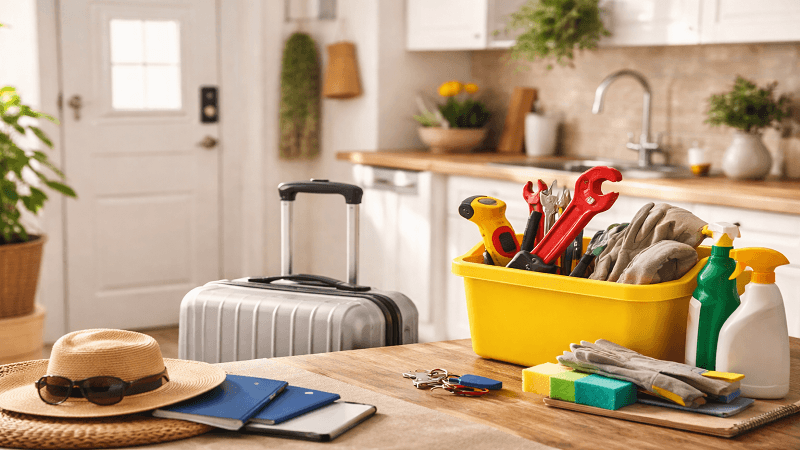
Traveling can be exciting and refreshing, but leaving your home unattended for several days or weeks requires proper preparation. Many homeowners focus only on packing and travel arrangements, forgetting that their house also needs attention before they leave. Small maintenance issues such as a leaking pipe, loose lock, or faulty electrical outlet can quickly become major problems if no one is around to fix them.
Creating a home maintenance checklist before traveling ensures your property remains safe, secure, and damage-free while you are away. Taking a few preventive steps and completing necessary repairs can protect your home from water damage, electrical hazards, pests, and security risks.
This detailed guide explains the most important repairs and maintenance tasks you should complete before leaving your home for a trip.
Why Home Maintenance Before Traveling Matters
Leaving a house unattended increases the risk of unnoticed problems. A minor issue that could easily be fixed in minutes may cause serious damage if it continues for days without attention.
For example, a small plumbing leak can damage floors and walls, while an electrical fault could lead to fire hazards. Similarly, an unlocked window or broken door lock could make your home vulnerable to burglary.
Proper home maintenance before traveling provides several benefits:
- Protects your property from unexpected damage
- Improves home security while you are away
- Reduces energy waste and utility costs
- Prevents pest infestations
- Gives you peace of mind during your trip
By completing a few essential repairs and inspections, you can leave home confidently and enjoy your travel without unnecessary stress.
1. Check Your Plumbing System Carefully
Plumbing problems are one of the most common causes of property damage in empty homes. Even a slow drip from a pipe can cause significant water damage over time.
Inspect Pipes and Faucets
Before traveling, check all visible plumbing areas including:
- Kitchen sinks
- Bathroom sinks
- Showerheads
- Bathtubs
- Washing machine connections
- Dishwasher hoses
Look for signs of leaks, moisture, rust, or water stains. If you notice any issues, repair them immediately.
Test Water Pressure
Turn on faucets and showers to ensure the water pressure is normal. Unusual pressure could indicate a hidden plumbing issue.
Check Toilets
Make sure toilets are not running continuously and that the base seals are intact. A constantly running toilet wastes water and may indicate internal damage.
Shut Off the Main Water Supply
If you are traveling for more than a few days, it is a good idea to shut off the main water valve. This simple step can prevent flooding or major water damage if a pipe bursts while you are away.
2. Inspect Electrical Systems and Appliances
Electrical safety should never be ignored, especially when leaving a home empty for an extended period.
Unplug Unnecessary Devices
Many electronic devices consume electricity even when turned off. These include:
- Televisions
- Computers
- Game consoles
- Coffee makers
- Toasters
- Phone chargers
Unplugging these devices reduces electricity use and lowers the risk of electrical fires.
Check Electrical Outlets
Look for signs of damaged outlets such as:
- Burn marks
- Loose sockets
- Overheated extension cords
If you notice any problems, have them repaired before leaving.
Turn Off Unused Appliances
Switch off appliances that are not needed while you are away, such as:
- Washing machines
- Dishwashers
- Microwaves
- Electric heaters
Test Smoke Detectors
Smoke detectors are essential safety devices. Test each detector and replace batteries if necessary.
3. Adjust Heating and Cooling Systems
Temperature control inside your home is important even when you are not there.
Set the Thermostat
Instead of turning off the HVAC system completely, set the thermostat to a moderate temperature.
For example:
- In summer, set the air conditioner slightly higher than usual
- In winter, lower the heating temperature but keep it on
This helps prevent damage caused by extreme temperatures.
Replace Air Filters
Clean air filters improve airflow and reduce strain on heating and cooling systems.
Check Air Vents
Make sure vents are clean and not blocked by furniture or objects.
Maintaining your HVAC system before leaving can help prevent mechanical failures.
4. Secure Doors and Windows
Security is a major concern when your home is empty.
Check Door Locks
Inspect all exterior doors to ensure locks are working properly. Replace broken locks or install stronger deadbolts if needed.
Lock All Windows
Even small windows should be securely closed and locked before leaving.
Install Motion Sensor Lights
Outdoor motion lights help discourage potential intruders by illuminating dark areas around your home.
Use Smart Lighting or Timers
Using automatic timers to turn lights on and off makes your home appear occupied.
Inform a Trusted Neighbor
Ask a neighbor, friend, or family member to occasionally check your home while you are away.
5. Clean the Kitchen and Remove Perishable Food
Leaving food inside the house can attract pests and cause unpleasant odors.
Check the Refrigerator
Remove foods that may spoil while you are gone.
Empty the Trash
Take out all garbage from the kitchen and other rooms before leaving.
Clean Kitchen Surfaces
Wipe countertops, clean sinks, and sweep floors to remove food crumbs.
Store Pantry Items Properly
Place dry food in sealed containers to prevent insects from accessing them.
A clean kitchen significantly reduces the chances of pest infestations.
6. Inspect the Roof and Gutters
Exterior maintenance protects your home from weather damage.
Check Roof Condition
Look for missing or damaged shingles that may allow water to enter the house.
Clean Gutters
Leaves and debris in gutters can block drainage and cause water overflow during rainstorms.
Inspect Downspouts
Make sure water flows freely through downspouts and away from your home’s foundation.
Trim Nearby Tree Branches
Branches touching the roof can damage shingles during strong winds.
Completing these repairs before traveling can prevent storm damage.
7. Prevent Pest Entry
Empty houses can attract pests looking for shelter.
Seal Cracks and Openings
Check for small gaps around:
- Doors
- Windows
- Pipes
- Vents
Seal these openings with caulk or weather stripping.
Remove Standing Water
Standing water around sinks or outdoors may attract insects.
Use Natural Pest Repellents
You may consider placing natural pest deterrents such as peppermint oil or bay leaves in storage areas.
Inspect Basements and Attics
Look for signs of rodents or insects before leaving.
Taking these precautions helps keep your home pest-free.
8. Protect Valuable Items and Important Documents
Safety of personal belongings should also be part of your preparation.
Store Valuables Securely
Keep expensive items such as jewelry, electronics, and cash in a secure safe or locked drawer.
Secure Important Documents
Documents like passports, property papers, and financial records should be stored safely.
Avoid Sharing Travel Plans Publicly
Posting travel details on social media can alert others that your home is empty.
Keeping your travel plans private improves security.
9. Prepare Your Home for Your Return
Preparing your home before leaving can make returning from your trip more comfortable.
Change Bed Sheets
Fresh sheets will make your return relaxing after a long journey.
Leave Some Basic Supplies
Having essential items such as snacks or bottled water available can be helpful when you return.
Set Entry Lighting
Adjust outdoor lights so your entrance is well lit when you arrive home.
Small preparations like these improve your overall travel experience.
10. Perform a Final Home Walk-Through
Before locking the door and leaving, perform one final inspection of your home.
Final Checklist
Confirm the following:
- All doors and windows are locked
- Electrical devices are unplugged
- Thermostat is set properly
- Water supply is turned off if needed
- Trash has been removed
- Lights or timers are set
- Valuables are stored safely
A quick walkthrough ensures nothing important is forgotten.
Common Mistakes to Avoid Before Traveling
Many homeowners overlook simple tasks that could prevent major issues.
Common mistakes include:
- Forgetting to turn off the water supply
- Leaving appliances plugged in
- Ignoring small plumbing leaks
- Failing to check locks and windows
- Leaving food or garbage in the kitchen
Avoiding these mistakes helps keep your home safe while you are away.
Benefits of Following a Home Maintenance Checklist
A proper checklist provides several long-term benefits:
Prevents Costly Repairs
Fixing small problems early prevents expensive damage later.
Improves Home Safety
Electrical and structural inspections reduce safety risks.
Saves Energy
Turning off unnecessary appliances lowers electricity usage.
Protects Property Value
Regular maintenance helps maintain the condition and value of your home.
Provides Peace of Mind
Knowing your home is secure allows you to fully enjoy your trip.
Conclusion
Traveling should be a relaxing experience, not a source of worry about your home. Taking time to complete a home maintenance checklist before traveling can prevent many common problems such as leaks, electrical hazards, pest infestations, and security risks.
By inspecting plumbing systems, checking electrical appliances, securing doors and windows, cleaning the kitchen, and performing essential repairs, you can leave your home confidently and enjoy your trip without stress.
A few hours of preparation today can save you from expensive repairs and unexpected surprises when you return. Make this checklist part of your travel routine, and your home will remain safe and well-maintained while you are away.